Nagpur’s monsoon creates more than long blackouts: repeated voltage changes, lightning-related surges, water-related faults and delayed service access can all interrupt office operations. By the end, you will know how to size a double-conversion UPS, compare it with other backup options, check the installation and specify batteries, protection and service support.
Key takeaways
- Calculate UPS capacity from measured loads, runtime and planned expansion.
- Use double-conversion UPS systems for sensitive office equipment and unstable utility power.
- Coordinate UPS input protection with a dedicated surge protection device and proper earthing.
- Confirm battery testing, water-ingress safeguards and monsoon emergency service coverage.
Why Nagpur’s Monsoon Changes the UPS Requirement
Nagpur’s June-to-September monsoon brings roughly 1,200 mm of annual rain, so power risk extends beyond ordinary outages. Lightning-related surges, repeated voltage fluctuations, condensation, water ingress and temporary utility faults can damage equipment or create unsafe electrical conditions. Heavy rain can also delay service access when a failure occurs.
For an online UPS for offices during monsoon in Nagpur, specify true double conversion classified as VFI under IEC 62040-3. Its rectifier and inverter continuously regenerate the output, so an input failure causes no transfer-time interruption. A line-interactive UPS does not provide the same operating mode.
A UPS does not replace building surge protection. Treat the service entrance, distribution-board SPDs, bonding, protective earthing, cable routes and lightning-protection system as separate design checks. Poor earthing or an uncoordinated SPD can damage the UPS and connected devices during a lightning event.
Use this office power backup monsoon checklist before acceptance:
- Test the UPS at the installed office load, including voltage regulation and alarms.
- Perform battery autonomy or discharge testing suited to the battery chemistry.
- Test static bypass, maintenance bypass and input-failure operation.
- Verify operation with the site generator, including transfer and return to mains.
- Confirm earthing, polarity, feeder protection and cable terminations.
- Record water-ingress controls, remote monitoring, response time and battery-service terms.
- Consider N+1 or separate UPS paths when one failure would stop critical operations; redundancy does not remove shared-feeder or common-battery risks.
Size the UPS From Real Loads, Runtime and Expansion
A UPS sized from nameplate VA alone can trip when real office demand rises. Measure peak watts at the distribution point, then record power factor, crest factor and startup current while desktops, monitors, switches, servers, biometric devices, CCTV and printer supplies operate together.
| Load measure | What to record | Sizing consequence |
|---|---|---|
| Watts | Normal and peak readings | Sets the inverter’s actual kW requirement |
| Power factor | Measured PF at peak load | Determines required kVA: watts divided by PF |
| Crest factor | Current peaks from electronic supplies | Exposes overload risk despite acceptable average watts |
| Startup current | Printer, motor or air-conditioning-control surge | Prevents nuisance trips during starting |
Choose kVA above the measured peak, with a documented reserve for added workstations or network equipment. Do not treat unused kVA as proof of safety: confirm that the UPS inverter’s kW limit also exceeds the load.
A true online, double-conversion VFI system under IEC 62040-3 is the appropriate operating class for monsoon ups for offices, but correct sizing still depends on measured demand.
Calculate battery energy as: battery watt-hours = load watts × required hours ÷ (UPS efficiency × allowable battery depth of discharge). Then verify the battery quantity, Ah rating, DC-bus voltage and manufacturer’s discharge curve at end-of-life voltage. Apply allowances for aging and temperature; a nominal Ah calculation commonly overstates runtime.
If a supplier claims 10 minutes, demand the test load behind that figure. Confirm whether it covers the actual peak load, not an empty UPS, and size extra battery strings only after checking charger limits, cabinet space and expansion plans.
Choose Double Conversion and Coordinate Surge Protection
Choose a true online double-conversion UPS when a Nagpur office cannot tolerate even a brief transfer gap, unstable voltage, or distorted waveform. Specify VFI classification under IEC 62040-3: the rectifier converts incoming AC to DC and the inverter continually rebuilds the output.
When utility power drops, the load stays on the inverter rather than waiting for a relay.
| Option | Output behaviour | Monsoon limitation | Choose it when |
|---|---|---|---|
| Online double-conversion UPS | Continuous VFI inverter output with no transfer-time interruption | Needs correct installation, cooling and maintenance | Servers, networking, security systems and sensitive workstations cannot reset |
| Line-interactive UPS | AVR correction with a battery transfer during failure | Transfer time and switching limits remain | Office PCs can tolerate brief interruptions |
| Inverter | Battery-backed output, dependent on model and changeover design | Waveform, regulation and transfer performance vary | Basic non-critical loads need backup |
| Generator | Sustained power after starting | Start delay, voltage transients and fuel dependence | Long outages require extended supply |
An online UPS for offices during monsoon in Nagpur is not a lightning-protection system. Coordinate it with:
- A surge protective device at the service entrance and another at the distribution board, selected and coordinated for the installation.
- Protective earthing, bonding, cable routing and the building’s lightning-protection system.
- Static and maintenance bypasses whose source has acceptable voltage, frequency, phase sequence and short-circuit protection.
Poor earthing or an uncoordinated SPD can damage the UPS and its load during a lightning event. Require site tests for input failure, bypass operation, generator compatibility, polarity and earthing; a factory certificate cannot prove that the installed system works together.
Match the UPS to the Office Electrical Installation
Verify the installation matches the UPS electrical design before connecting it. An online ups office in nagpur can lose protection if phase sequence, breaker coordination or earthing is wrong.
1. Confirm whether the supply and load are single-phase or three-phase, then match the UPS input and output arrangement. Check phase rotation, neutral continuity, voltage and frequency at the proposed connection point. A reversed phase sequence can block bypass transfer.
2. Size the incoming, bypass and output breakers from the manufacturer’s current ratings and short-circuit withstand data. Coordinate upstream and downstream breakers so a server fault trips the nearest protective device instead of shutting down the whole office.
3. Inspect both bypass paths. Static bypass can move an overload or inverter fault to utility power; a maintenance bypass lets technicians service the UPS without interrupting the load. Test that the bypass source has acceptable voltage, frequency, phase sequence and short-circuit protection.
4. Verify protective earthing, neutral bonding, polarity and cable sizes with an electrician. Check service-entrance and distribution-board surge protective devices, bonding and lightning-protection connections; an uncoordinated SPD or poor earth can damage the UPS during a lightning event.
5. Install the unit in a clean, ventilated, dry area with clearance for airflow and battery maintenance. Keep it away from windows, leaks, standing water and condensation. A 95% non-condensing rating does not permit moisture on batteries or electronics. Route power and data cables separately, and label every isolation point.
Specify Testing, Batteries and Monsoon Service Support
Reject any runtime claim that does not state the load in watts, battery quantity, ampere-hour rating, DC-bus voltage, power factor and end-of-life assumption. A “30-minute” figure at 50% load does not prove 30 minutes for your servers, network switches and CCTV.
An office power backup monsoon specification must test the installed system, not just rely on a factory certificate.
| Evidence | What to demand | Why it matters |
|---|---|---|
| Commissioning report | Installed-load run, input-failure, alarm, static-bypass and maintenance-bypass tests | Confirms protection and transfer paths work at your site |
| Battery record | Chemistry-approved autonomy or discharge test, with current, voltage, duration, cutoff and temperature recorded | Exposes undersized or aged batteries |
| Electrical report | Earthing, polarity, phase sequence, bypass-source voltage and frequency checks | Prevents unsafe operation and bypass failure |
| Generator test | Operation while the generator supplies the UPS | Finds frequency, waveform and recharge conflicts |
For commercial UPS in Nagpur, require a true double-conversion VFI unit under IEC 62040-3 and verify the bypass source has short-circuit protection. Ask Mahendra power Zone, or any competing supplier, to put these acceptance tests in the quotation rather than promising them verbally.
Your service contract must name the maximum on-site response time, remote-monitoring responsibility, preventive-maintenance frequency, battery-replacement terms, bypass-parts availability and treatment of water or lightning damage. “24/7 support” means little without a battery SLA and a defined response time during heavy rain.
Related products
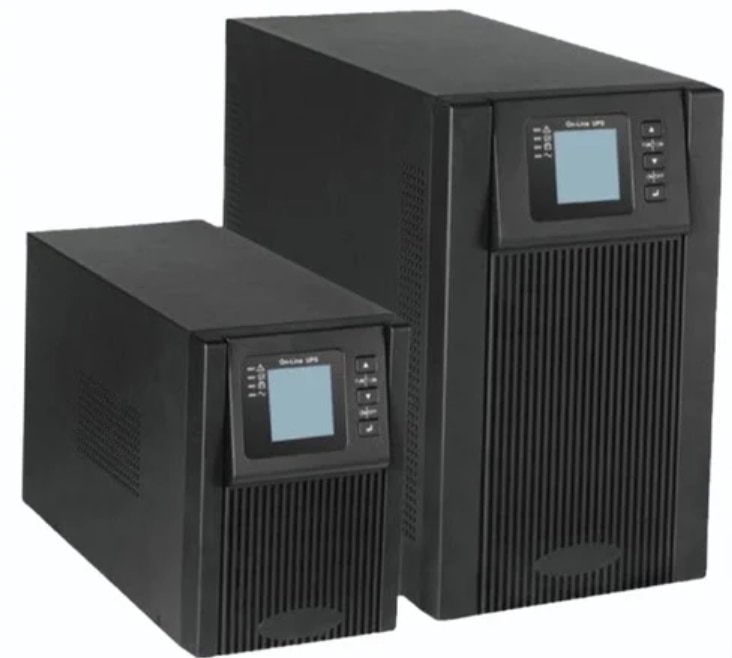 | Online Ups Capacity 5 KVA Configuration 3 Phase IN & 3 Phase OUT Model Name/Number 5 KVA ONLINE UPS Back Up Time 30 Mins Battery Backup 90 Number Of Batteries... View product → |
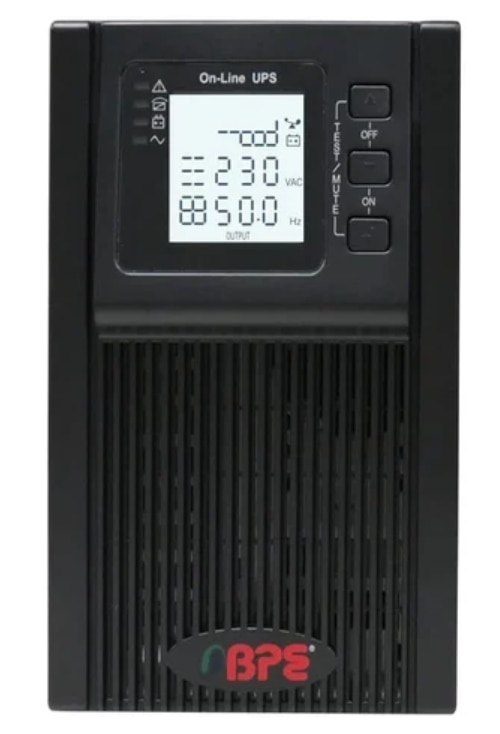 | Online Ups Product Details: Capacity 3 KVA UPS Topology UPS Phase Three Phase Brand BPS Configuration 3 Phase IN & 1 Phase OUT Application Home, Office,... View product → |
Frequently asked questions
Why does Nagpur’s monsoon require more than ordinary outage backup?
Lightning, voltage fluctuations, condensation, water ingress and delayed service access add risks beyond a simple power cut.
How should you size an online UPS for an office?
Measure the connected load in watts, set the required runtime, allow capacity for expansion and select a UPS with suitable kVA and battery capacity.
Why choose a double-conversion online UPS during monsoon?
It continuously converts incoming AC to DC and back to clean AC, isolating office equipment from many voltage disturbances and utility faults.
What should you check before installing a commercial UPS in Nagpur?
Check circuit capacity, earthing, bypass arrangements, ventilation, cable routes, battery placement and coordination with surge protection.
What monsoon service support should an office UPS contract include?
Specify battery inspections, alarm and bypass testing, response times, water-ingress checks, spare-part access and planned preventive maintenance.
Related products
 | Online UPS Phase Single Phase Brand Luminous Back Up Time 10-20 Mins Frequency (Hz) 50 - 60 Hz Audible Noise Max 40 dBA Technology Sine wave Operating... View product → |
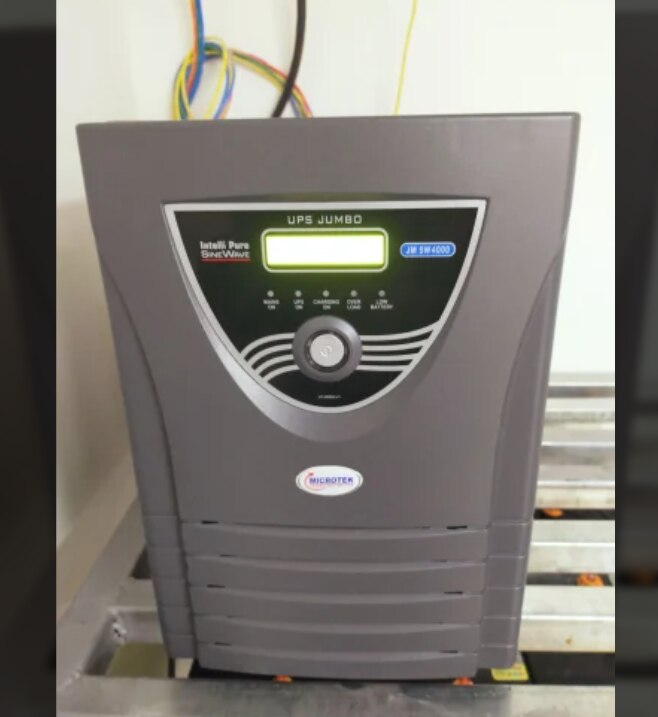 | Ups System Type Inverter UPS Brand Eaton Model Name/Number Microtek Online Ups Usage/Application Industrial Battery Type Microtek Online Ups Phase Microtek... View product → |
 | Ups Battery Type Online Brand Eaton Usage/Application Industrial Protection OverVoltage Warranty 1 Year We MAHENDRA POWER POWER , leading supllier of UPS... View product → |
Keywords